
Top 5 SEO Best Practices to Boost Rankings
Five battle-tested SEO practices that consistently move the needle for local businesses — with specific tactics you can implement this week without a developer.
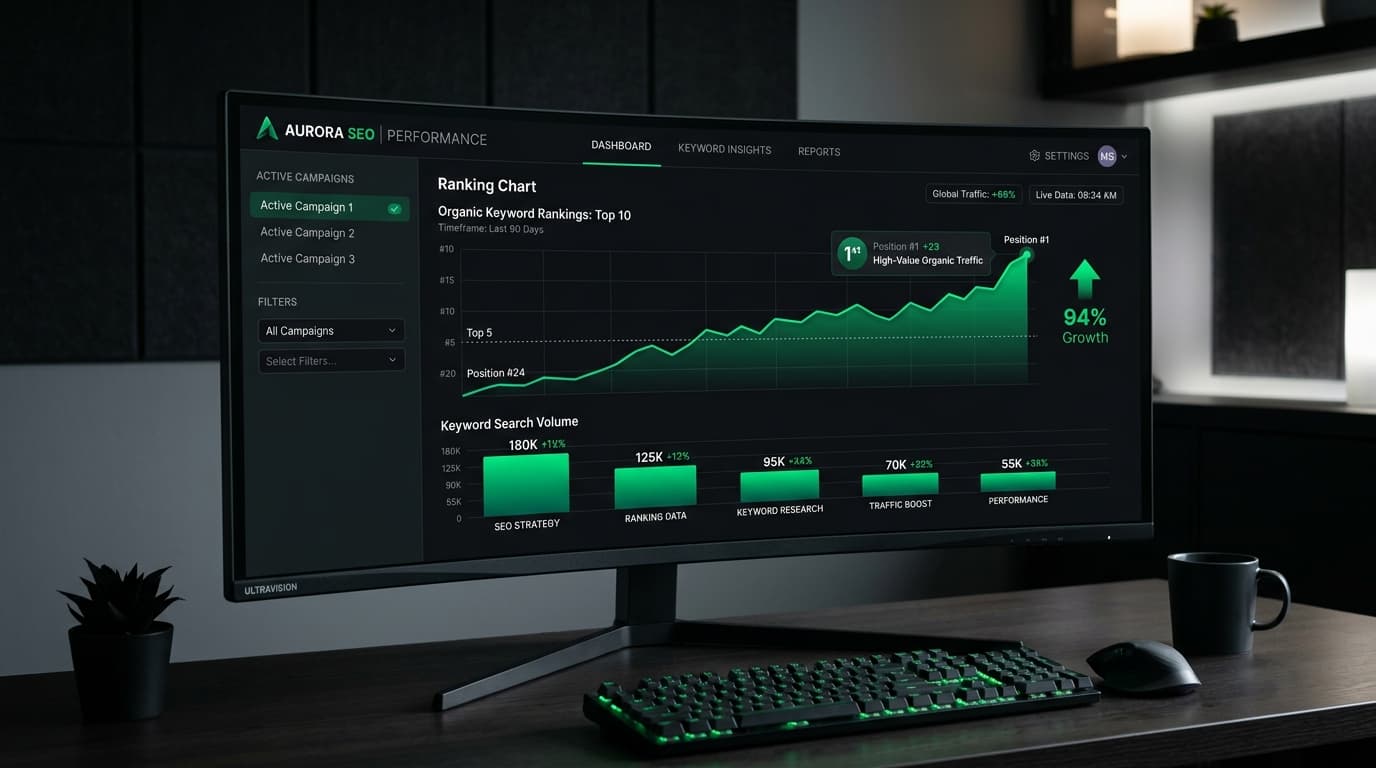
Good SEO functions as a magnet for your website, drawing in steady streams of qualified visitors who are actively looking for exactly what you offer. With Google updating its algorithm hundreds of times per year, it's essential to focus on proven, people-first fundamentals rather than chasing shortcuts. Here are five practices that consistently produce long-term results for local Florida businesses — with specific tactics you can act on today.
1. Create Content People Actually Want to Find
Google's Helpful Content guidance is unambiguous: content should be written for people first, search engines second. That means addressing real questions your customers have, demonstrating genuine expertise, and providing answers thorough enough that the reader doesn't need to go back to Google to fill gaps.
Practically, this means:
- Writing to a specific audience (e.g., "small business owners in Tampa" rather than "everyone")
- Covering a topic comprehensively — answering the follow-up questions, not just the surface question
- Including original insights, examples, or data that readers can't find elsewhere
- Structuring content with clear headings so readers can scan and find what they need quickly
The test we use at Profit Boost: would a reader bookmark this page and send it to a colleague? If the answer is no, the content isn't done yet.
Thin content — pages under 500 words with no real depth — is one of the most common reasons Florida small business websites fail to rank. Google has been explicitly targeting low-quality content since the Panda algorithm update, and its Helpful Content system (now integrated into the core ranking algorithm as of March 2024) makes this evaluation continuous and automatic.
2. Choose Keywords Wisely
Keyword research is the foundation of an effective SEO strategy. The goal is to identify the exact phrases your potential customers type into Google — including their search intent (are they researching, comparing, or ready to buy?) — and build content around those queries.
For local businesses, this typically means a mix of:
- Service + location keywords (e.g., "tree removal Tampa FL," "auto body shop Orlando")
- High-intent action keywords (e.g., "hire SEO consultant Florida," "book car detailing near me")
- Informational keywords that attract early-stage prospects (e.g., "how much does SEO cost," "what is Google Business Profile")
Once you have your target keywords, deploy them naturally in the places that matter most:
- Page title tag and H1 heading
- URL slug (keep it short and descriptive)
- The opening paragraph
- At least one H2 subheading
- Image alt text
- Meta description
What to avoid: keyword stuffing (repeating the same phrase unnaturally throughout the page). Google's algorithms are highly sophisticated at detecting over-optimization, and it can actively suppress your rankings. Natural, readable prose that incorporates keywords contextually will always outperform mechanical repetition.
3. Speed Up Your Mobile Pages
Google switched to mobile-first indexing in 2023, meaning it evaluates and ranks your site based on its mobile version — not the desktop version. If your mobile experience is slow, broken, or hard to use, your rankings reflect that regardless of how good the desktop version looks.
Core Web Vitals — Google's official page experience metrics — are now confirmed ranking factors. The three primary metrics are:
- LCP (Largest Contentful Paint) — how fast the main content loads. Target: under 2.5 seconds.
- INP (Interaction to Next Paint) — how responsive the page is to user interactions. Target: under 200ms.
- CLS (Cumulative Layout Shift) — how stable the page layout is as it loads. Target: under 0.1.
Actionable improvements you can implement this week:
- Compress all images using a tool like Squoosh before uploading
- Serve images in modern formats (WebP instead of PNG/JPEG where possible)
- Remove unused JavaScript and CSS — these are often the biggest contributors to slow load times
- Enable browser caching and use a CDN for static assets
- Test your site with Google PageSpeed Insights and work through the flagged issues
4. Earn Mentions from Trusted Sites
Backlinks — links from other websites pointing to yours — remain one of Google's strongest ranking signals. Backlinko's analysis of 11.8 million Google search results found that the number of domains linking to a page correlated more strongly with rankings than any other factor studied. But quality beats quantity decisively: one editorial link from a relevant, authoritative site is worth more than 100 links from low-quality directories.
For Florida businesses, proven link acquisition strategies include:
- Local press and community coverage — sponsor a community event, make a charitable donation, or participate in a local initiative and pitch it to local news outlets
- Guest articles on industry publications — contribute expertise to trade blogs or local business journals
- Chamber of commerce and association listings — Florida Chamber, local BNI chapters, and industry associations typically provide followed backlinks
- Resource page inclusions — identify pages in your industry that link to "best local providers" and pitch your inclusion
- Supplier and vendor pages — businesses you work with often list their partners on their website
5. Fix Your Site Structure First
Before pursuing any new content or links, audit your existing site structure. Fundamental errors here prevent Google from properly crawling and understanding your site — and no amount of content or backlinks will overcome them.
The structural audit checklist:
- Heading hierarchy: Every page should have exactly one H1 that describes the page's primary topic. H2s cover main sections; H3s cover subsections. Never skip levels.
- Internal linking: Every important page on your site should be reachable within 2–3 clicks from the homepage. Pages with no internal links pointing to them (orphan pages) are difficult for Google to discover and understand.
- Canonical tags: If you have duplicate or near-duplicate pages, canonical tags tell Google which version is authoritative — preventing it from splitting your ranking signals across multiple URLs.
- Title tags and meta descriptions: Every page needs a unique, accurate title tag (under 60 characters) and meta description (under 155 characters). These appear in search results and directly influence click-through rate.
- Schema markup: Structured data helps Google understand your content type — whether it's a local business, a blog post, an FAQ, or a product. Google has confirmed that schema markup can improve how your listing appears in search results.
- No broken links: Crawl your site regularly with Screaming Frog or a similar tool to identify and fix 404 errors and redirect chains.
Bonus: Optimize Your Google Business Profile
For local businesses, your Google Business Profile (GBP) is arguably the single highest-ROI SEO asset you have. An optimized GBP appears in the local map pack — the three listings that appear above organic results for local searches — and drives direct calls, direction requests, and website visits without requiring the searcher to leave Google.
GBP optimization fundamentals:
- Complete every field — categories, service areas, hours, services, description
- Upload fresh photos regularly (businesses with more photos get more views)
- Respond to every review — positive and negative
- Post updates at least twice per month to signal an active business
- Add your products and services with accurate descriptions
- Ensure your NAP (Name, Address, Phone) matches exactly across your website and all directory listings
For a real-world example, see how we took Branch Management Tree Care from page 4 to page 1 of the Google map pack in 3 months — driven primarily by GBP optimization and a systematic review generation process.
The Bottom Line
SEO success doesn't come from shortcuts or gaming the algorithm — it comes from building a genuinely useful, fast, authoritative website and marketing it consistently. These five practices, applied together and maintained over time, produce rankings that compound in value while competitors are still paying for every click.
At Profit Boost LLC, we handle all of this as a coordinated strategy: technical audit, content development, link building, GBP optimization, and keyword research working in concert to grow your rankings, traffic, and leads. Book a free 1-hour audit to see exactly where your site stands — and what it would take to rank in the top three for your most valuable search terms.
Zachary Schreiber
Founder, Profit Boost Digital Marketing · Florida's #1 SEO Consultant

Ready for your business to be found online?
Start with a free 1-hour audit. We'll show you exactly what's holding your site back and hand you a personalized action plan — no cost, no commitment.